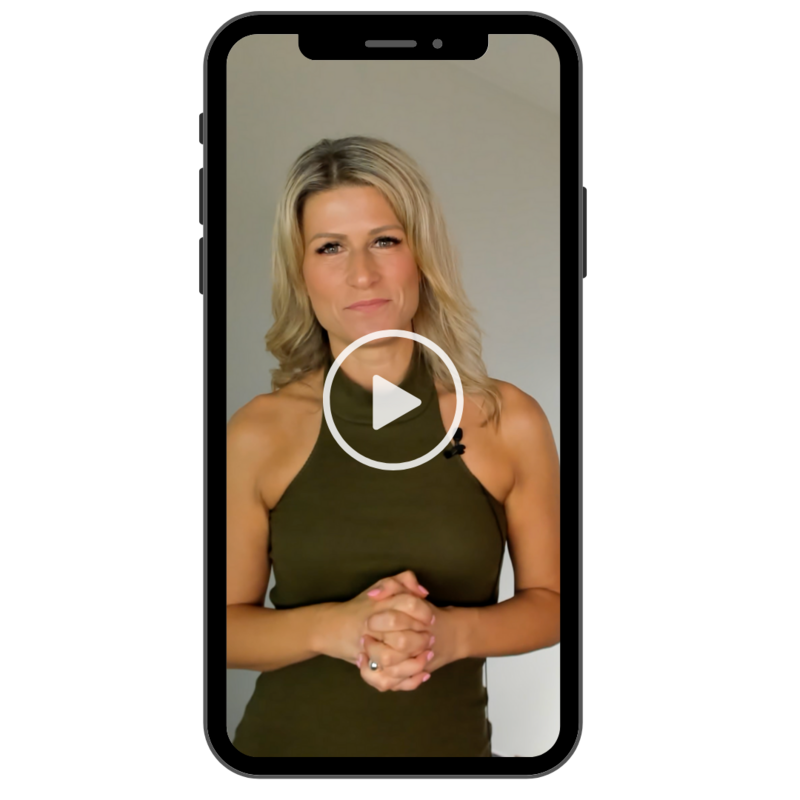

Depression: How she Reversed 5 Years of Depression and Saved Her Marriage in Just 2 Weeks (Case Study)
[vc_row][vc_column][vc_raw_html]JTNDZGl2JTIwY2xhc3MlM0QlMjJ5b3V0dWJlLWNvbnRhaW5lciUyMiUzRSUwQSUyMCUyMCUyMCUyMCUzQ2lmcmFtZSUyMHNyYyUzRCUyMmh0dHBzJTNBJTJGJTJGd3d3LnlvdXR1YmUuY29tJTJGZW1iZWQlMkZXWDJBb1RZQmIyTSUyMiUyMGFsbG93ZnVsbHNjcmVlbiUzRSUzQyUyRmlmcmFtZSUzRSUwQSUzQyUyRmRpdiUzRQ==[/vc_raw_html][vc_empty_space height=”45px”][vc_column_text]
Perimenopause can be a really challenging season. The hormonal changes occurring during this time can lead to depression, which affects everything from your energy levels to your career and relationships.
But what if I told you that a complete transformation is possible… and that it could happen faster than you think?
My client, Kim, had tried every hormone replacement therapy drug known to man and joining the Buh-Bye Burnout program was her last resort. Today, I’m sharing her journey as a testament to what can happen when you restore balance to your body.
Within two weeks, Kim reversed five years of depression and saved her marriage from the brink of divorce. Here’s what we focussed on:
An Accelerated Transformation
Typically, we recommend clients approach the program step by step, gradually implementing small habits to avoid overwhelm. However, Kim chose the accelerated path, tackling everything at once. By week two, Kim experienced a remarkable change. For the first time in years, she felt clearer, sharper, and more focused at work. Her husband noticed the transformation as well, telling her, “You're back!”
Reducing Stress Hormones
So, what did Kim do differently? The foundation of her transformation was focusing on reducing stress hormones. In the initial phase, she cut out caffeine, prioritised sleep and made dietary changes like going gluten and dairy-free, which can significantly impact mental health by reducing inflammation.
Mind is Medicine
Kim learned to stop “stacking stresses” throughout the day—a habit many of us aren't even aware we're doing. This constant mental load keeps our bodies in fight-or-flight mode, which impedes our ability to restore healing and balance. Circumstances and life responsibilities might stay the same, but that doesn’t mean we have to carry the stress in our minds.
The Gut-Brain Connection
The gut's health is paramount for mood regulation, and the program addressed this by restoring a healthy microbiome, minimising inflammatory triggers, and eventually detoxifying the body. These steps are essential, as inflammation and gut imbalance can lead to the brain being in a constant state of ‘fire,' or excessive stress and imbalance.
Kim's incredible transformation shines a light on how comprehensive and rapid change can be when we address the root causes holistically. Though not everyone will experience transformation at the same speed, Kim’s story is a powerful testament to the change that is possible when we look beyond symptoms to the core issues.[/vc_column_text][vc_tta_accordion style=”flat” shape=”square” color=”white” active_section=”3″ no_fill=”true” collapsible_all=”true”][vc_tta_section title=”Transcript” tab_id=”1716528090603-cfde93dc-583317165356843821716536535162″][vc_column_text][00:00:00] Vesna: today I want to talk about depression and also related depression like perimenopausal depression and I want to share a case study of a client that I just spoke to, Kim, who has been through the Buh Bye Burnout program. Her results, what she did to get results and her transformation at the end.
[00:00:54] So Kim joined the program, she was, as she said, in a very dark place. She'd been heavily medicated for depression. She started having depressive symptoms perimenopausally, so as her hormones started to change, she said, I tried every that there was known to mankind, and I tried every program, and nothing was helping.
[00:01:15] And she said, it was a really dark place. It was affecting her relationship with her husband, she had no libido, her mood was very low, she had poor stress tolerance, you know, she was almost on the brink of divorce, okay? And it was affecting all areas of her life. she joined Bye Bye Burnout, and she said, this is the last one I'm going to try.
[00:01:36] Now, when she started, she didn't do things exactly the way that we normally map them out, because as you go through the program, we get you to implement small habits over time, because most people come in, they're really overwhelmed, they're really overstressed, the capacity to take on new information is a bit limited, and so we tried to do these very simple habits, so day by day by day and they build and so you're feeling better You're feeling clearer and you're feeling on top of things and you can take more on right?
[00:02:03] but Kim did the accelerated version where she just did everything from get go Which is not what we recommend, but she has done it that way and by week two She said she just felt so much clearer. She noticed that she could focus on her work for longer periods of time.
[00:02:20] And her husband said to her, so you've got to imagine she was stuck in this place for five years and on week two, she's already seeing these changes. And her husband says to her, he goes, I don't want to call it too early. He goes, but you're back like you're back. she said, they both noticed. And they're really excited.
[00:02:35] She had more spark. She said, I just felt amazing, right? She can deal with stress better. Yeah. And honestly, at the end, when I spoke to her, I actually got tingles, we both did. She said, me and my husband were talking last night and my husband said, this program saved you, right? And she said, if it wasn't for this, she goes, we would be divorced now.
[00:02:55] Now, I'm not trying to give the program a promotion here, okay? I'm not trying to give it a big plug. What I want to emphasize is the transformation that she went through. How quickly it was. Now that's not typical, okay? But it was a quick transformation for someone who'd been stuck in this place for a long time.
[00:03:10] And I want to talk about what she did, right? So if you're struggling in this place, there is answers, there is a solution, right? And when you get to the heart of the problem, the real problem, the real cause, you can see shifts quite quickly, right? So, What did Kim do? The first thing that we do in the program is reduce stress hormones.
[00:03:28] So it's small habits like cutting out caffeine, getting to bed on time, everything to shift your body out of fight or flight mode so your body can't heal when you're stuck in fight or flight mode. So we have the stress response and then we have the healing response, right? And you know, either we're stressed or we're in the healing response.
[00:03:45] When you're in that fight or flight mode, it doesn't matter what supplements you take, what medicine you take, whatever it is, the system is over revved and it cannot enter that state where it can heal itself quite rapidly, okay? And so, in that first week, she also implemented some other dietary changes like going gluten free and dairy free which we recommend later on because of the impact to mental health.
[00:04:06] particularly gluten, um, and dairy can create a lot of inflammation, which affects mental health. And so she did that from the very beginning, which is overwhelming, so we don't normally recommend that, but that is why she saw the results by week two, right? So she saw these results very quickly by week two.
[00:04:21] Putting her body back into balance by reducing the stress hormone. She didn't change anything about her life. Okay. So her life, she was working and had the same responsibilities, but her system relaxed. Her system slowed down. Okay. And then everything can repair itself. The next part is a mind as medicine.
[00:04:39] So she noticed that, you know, which is what I see for a lot of people is that, you She said, I was stacking my stresses throughout the day. This would go wrong. And then that would go wrong. And then I've got this problem or worried about this. And so it would just stack, stack, stack. Right. And then she'd have massive anxiety and, and all of that stress, All this overthinking creates a lot of stress and it just burns the brain out. And it is exhausting for the brain and we have chemical neurotransmitters or chemistry in our brain that needs to be balanced in order to balance our mood. And so when that's just in overdrive, you can imagine we're just burning through so much of that, that eventually we don't have those, those important chemicals to keep our mood balanced.
[00:05:16] Okay, and so she noticed that she was, When she could see, actually, that's what I do. I stack my stresses and I build them up over the day and I carry them with me, right? So, part of the Mind is Medicine part in the program, we really focus on not trying to change your outside life, right? Because, you know, there's always going to be challenges and stress that pop up in our life.
[00:05:35] That, that is life. It's our ability to, still, create health and mental health and healthy relationships even though we have those challenges and that's an inside job. Okay. And so a lot of that happens because we have way too much mental stress. We carry way too much on our minds and we don't realize it.
[00:05:55] And that is keeping the body in this fight or flight mode. Okay. That is the biggest handbrake that we have to having more energy, having better moods, you know, having higher libido, sleeping better at night, burning body fat for energy. That is the biggest disruptor to that. So the first parts of the program are reducing stress hormones. We're not working on gut, we're not doing any other kind of system repair because that is doing the repair work, right? As we bring those stress hormones down, you're getting out of fight or flight mode and you're entering healing state and the body is rapidly healing, okay?
[00:06:28] And that's what Kim noticed, that her symptoms disappeared so quickly after she'd struggled with them for five years. The next part is gut repair. The gut affects our mood, we produce a lot of our healthy chemical, neurotransmitters important for our brain, we produce them in our gut and so there's a link between the gut and the brain, we know this via the gut brain axis, I've talked about this, and so the brain goes, you know, we create a lot of inflammation through food, through medication, through caffeine, through alcohol, through stress, right?
[00:06:56] And processed foods, sugars, etc. that inflames our gut and it inflames our brain. So it's kind of that, what they call is like the, the brain on fire. And again, it's disrupting our neurotransmitters, that healthy balance in our brain, and it's disrupting our mood. So we repair the gut, restore the microbiome, make sure that anything in there that is causing any harm, any imbalance in bacteria.
[00:07:18] Any low amounts of good bacteria, all of that is corrected. Okay. And then moving onto a detox because we know that a lot of the toxicity creates more inflammation in the body and inflames the brain as well. It affects our thyroid function. It affects our hormones. that's the whole process that she went through.
[00:07:36] And like I said, by the end of it, she said, this program saved their life which is an amazing transformation. And, you know, like I said to her, well done because you did the hard work, right? You did it. You were in a really hard place. You were in a really dark place, felt really stark, but you did this massive overhaul.
[00:07:56] More quickly than I would ever recommend. But you got the transformation, you got the massive change and that's, you know, congratulations to you for doing the work and, and moving forward. Keep moving forward, right? Not doubting yourself, not holding yourself back, not sabotaging yourself, not saying it's too hard, whatever it is, right?
[00:08:10] So, you know, that's, I think for her, that's a massive. Massive congratulations because it's not easy making these changes, right? We, we come up against our own roadblocks. if you're stuck in this place, like sometimes women are just like, I need to fix my hormones. That's, that's where it's at.
[00:08:26] Right. But for Kim, you know, she did that and she was still stuck in the same place, right? And so we have to look at the body holistically about what is causing these imbalances. We can't just treat one hormone, one area and hope for the best, right? And so if you're stuck in this place, I just, I wanted to share this to show you how quickly change can happen and how quickly transformation can happen.
[00:08:47] It's not typical. I'm not saying that, you know, if you come in and you're going to get those results. But what I wanted to showcase was. the potential for that, [/vc_column_text][/vc_tta_section][vc_tta_section title=”Links” tab_id=”1716535392600-7bbf13d5-b61c17165356843821716536535162″][vc_column_text]Website: vesnahrsto.com
Master Cortisol Webinar: https://training.vesnahrsto.com/join-masterclass[/vc_column_text][/vc_tta_section][/vc_tta_accordion][/vc_column][/vc_row]

Hi, I'm Vesna!
I’m a Naturopath, Transformational Coach, Mind-body Medicine Specialist & Speaker, and I love supporting modern women who are overworked, busy & burnt out.

Freebie Alert:
Body + Business Reboot Assessment
Free Step-By-step plan designed for women in business.


Leave a Reply Cancel reply
You must be logged in to post a comment.
Where exhausted & anxious professional women regain their ENERGY & Confidence. So they can live the life they truly want.
3 STEP
GAME PLAN
Join The Masterclass