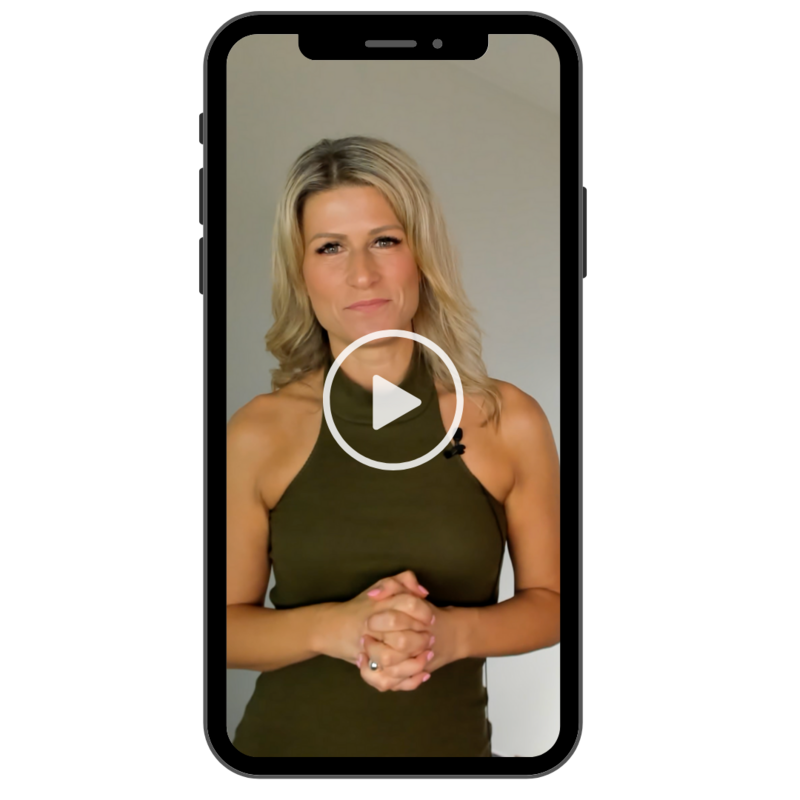

Fix poor sleep with a circadian reset
[vc_row][vc_column][vc_video link=”https://www.youtube.com/watch?v=BRzHGJJN6BI”][vc_empty_space height=”45px”][vc_column_text]
Do you ever feel like you're constantly dragging yourself through the day, desperate for bedtime, only to find yourself wide awake when your head hits the pillow?
Or maybe you doze off easily but wake up around 2 or 3am and can't get back to sleep.
If this sounds all too familiar to you, the culprit could be a disrupted circadian rhythm.
What is your circadian rhythm?
Think of it as your body's internal clock, a 24-hour cycle that regulates everything from sleep and wakefulness to hormone production and digestion. When this rhythm gets thrown off whack, it throws a wrench into all those vital processes.
So what are the main causes of this circadian rhythm dysregulation?
Blue Light Overload: Our devices are major offenders, emitting blue light that mimics daylight and suppresses melatonin production. This throws off our natural sleep-wake cycle, making it harder to fall asleep and stay asleep. Artificial lights in our homes and workplaces contribute to the problem as well.
Shift Work and Travel: If your work schedule constantly flips your sleep-wake cycle, or you're a frequent flyer battling jet lag, your circadian rhythm takes a hit. The body struggles to adjust to constantly changing light-dark cues and eating at different times. It’s tricky to manage this if your work or lifestyle requires inconsistent sleeping patterns, but if you’re aware of it you can take steps to minimise the impact.
Unnatural Light at Night: Evenings spent watching brightly lit screens or working under harsh fluorescent lights can disrupt melatonin production. Our ancestors relied on the natural dimming of sunlight to signal bedtime, but our modern world throws artificial light into the mix, confusing our internal clock. Blue-light-blocking glasses can help reduce the disruption to your circadian rhythm if you must be on screens in the evening.
Inconsistent Sleep Schedules: Going to bed and waking up at random times throughout the week throws your circadian rhythm into disarray. The body craves consistency, and erratic sleep patterns make it difficult to establish a strong, regular sleep-wake cycle.
Lack of Sunlight Exposure: Sunlight acts as the master cue for our circadian rhythm. Not getting enough sunlight during the day, especially in the morning, disrupts the natural cycle and makes it harder to feel sleepy at night.
The good news is, there's a simple and free way to start realigning your internal clock: sunlight!
Sunlight is the master cue for your circadian rhythm. Aim to get some sun exposure, especially in the morning and evening, around sunrise and sunset. Even ten minutes a day can make a difference. Get outside, ideally without sunglasses, and let the sunlight hit your eyes. This helps regulate your wake-sleep cycle and boost energy levels naturally.
Realigning your circadian rhythm takes time, especially if it's been disrupted for a while. But with consistent sunlight exposure and good sleep hygiene practices, you'll be on your way to better sleep and a more energized you.
So ditch the snooze button and embrace the sunrise! Your body will thank you for it.
[/vc_column_text][vc_tta_accordion style=”flat” shape=”square” color=”white” active_section=”3″ no_fill=”true” collapsible_all=”true”][vc_tta_section title=”Transcript” tab_id=”1716528090603-cfde93dc-583317165356843821716536535162″][vc_column_text]
[00:00:00] Vesna: Welcome to the Peak Revival podcast. My name is Vesna and today we're going to talk about. How to improve sleep quality through realigning your circadian rhythm So if you find yourself going through the day, feeling really tired, you just can't wait to get into bed at nighttime, but come the evening, you're either Not tired or you go to bed and you can't fall asleep or you wake up between two, three, four AM and you can't get back to sleep and you feel even more tired the next day.
[00:00:27] So this is not an uncommon problem that I hear and it makes it really hard to recover from exhaustion and high stress and fatigue when you're not getting that sleep recovery time. Now, there are many things that can be causing this. It can be circadian rhythm, which is what I'm going to talk about today.
[00:00:47] It can be blood sugar level fluctuations. It can be high stress hormones as well.
[00:00:52] But let's talk about circadian rhythm because I, this topic is just going to be so much bigger as the years go on. Because Our circadian rhythm affects so much in our body and we're only just really discovering how much of an impact it has. So all this is, is that the fact that our body runs on a 24 hour clock.
[00:01:10] So every single cell in our body has like a little clock and when our circadian rhythm is, out of whack or disrupted, it means that all the clocks in our body are keeping different time. they're not synced up on the same time. It also means because our organs also run on a 24 hour clock.
[00:01:29] Our gut has a clock, our liver, our body fat, our pancreas, and so much more. And so, you know, When we have a circadian rhythm disruption, it starts to affect our hormones, our organs, our systems, our mitochondria, so our energy, our mood, and how quickly our body can recover. And all of that means it has a huge impact on performance and peak performance.
[00:01:55] Okay, so what causes circadian level or circadian disruption? Number [00:02:00] one is So if your sleep's been disrupted for a long time, it's going to be out of sync. If you're a shift worker, if you're going to bed really late, if you've got jet lag and obviously if we're on our devices too much, too much blue light exposure at nighttime, but even during the day and not enough sleep.
[00:02:20] Sunlight is going to cause circadian disruption.
[00:02:24] So in order for our body to re sync these clocks to the master clock in our brain, we need sunlight. Now, if you think about how much sunlight you actually get. So if you're anything like me, I have to deliberately go out and get sunlight because otherwise I'm on my computer all day, I will be on my device.
[00:02:44] And it's quite easily to just be consumed by blue light during the day. And so. Have a look at how much sunlight you're actually getting. And the most important time is the sunrise and the sunset. So the sun will reset our circadian rhythm. It will reset our clocks. And the only way that our body can reset those clocks is through these external cues.
[00:03:06] So we need sunlight. We are designed to have sunlight in order to reset our clocks. The other ways that you can reset is through, but they're not the predominant ways. The main one is through the sun. Light and dark, so sunlight. Then we have temperature, we have the timing of meals, and exercise also helps to realign the circadian rhythm.
[00:03:24] So it's one of these things that as your sleep quality becomes, well, you've got poor sleep quality, it becomes chronic. So for months or for years, I have women who join my programs that are like, But having poor sleep for many, many years. And so there is a, a readjustment period. And so it's about really realigning those circadian rhythms, which is really easy to do and it's free, right?
[00:03:48] All you need to do is step outside and get sunlight.
[00:03:50] So my recommendation, so if you're unable to fall asleep at night, if you're waking up in the middle of the night, or even if you. struggle to wake up in the morning, [00:04:00] then really do this exercise. So you're going out to watch the sunrise and you're also watching the sunset. And so that means taking 10 minutes to be outside, looking at the sun, obviously not directly in where it's hurting your eyes, but you're looking in that direction, you're blinking in case it hurts, but you're having the sun on your face and your eyes are absorbing the sun because the way that we reset the master clock is through the sun getting into our eyes to stimulate that master clock in our brain.
[00:04:26] So if you're in a cold climate like I am right now, it can make it challenging to see the sunrise because it kind of comes up and goes straight behind the clouds. But the best that you can on the days that the sun is visible, go and see the sunrise. Make sure it's not behind a glass window. It has to, you actually have to be outside, not wearing any glasses or sunglasses either, because that prevents the sun from getting in.
[00:04:51] So the benefits of Having this sunrise, sunlight exposure it gives us, infrared light. So we, during the day, we have a lot of blue light. So from our devices, from our lights, from the fluorolights in the ceiling and our devices, we are bombarded with blue light, which throws out our circadian rhythm, but can also, affect so much of our glucose response, our fat burning ability, and so much But the other thing that, you know, getting that sunrise exposure is that it actually helps to stimulate hormones and peptides, which gives you a really good surge of energy in the morning. So it's one of the quickest ways to wake yourself up better than caffeine. And I do, I love coffee too, but this one is better than caffeine to wake up the system, get your body and your hormones charged for the day.
[00:05:36] So you have energy in the morning and then it's It starts to, you know, those hormones start to change at nighttime. So you're increasing the melatonin come the evening, you're feeling tired, you're feeling relaxed and you're ready to go to bed and you can sleep. Have a restorative sleep and wake up feeling refreshed.
[00:05:51] The other little thing that I also use, uh, blue light blocking glasses, right? You've got the yellow ones. You've also got orange [00:06:00] ones for at nighttime. And these are a really good way if you're on the computer a lot like I am, it helps to block the blue light from getting into the eyes so much.
[00:06:09] So if you're feeling exhausted, but you can't sleep, or you know that your sleep cycle is out of whack and that you're not getting a proper restorative sleep because you're waking up tired and you're waking up during the night, then tomorrow morning, get out there, watch the sunrise if you can in your climate and also get sunlight during the day as well.
[00:06:29] So the morning and the sunset are really good ways to get some sleep. sunlight, even if you have fair skin, because it's very low UV factor, but it has the infrared light, which is really important for our circadian rhythm. So go try that tomorrow morning.
[/vc_column_text][/vc_tta_section][vc_tta_section title=”Links” tab_id=”1716535392600-7bbf13d5-b61c17165356843821716536535162″][vc_column_text]Website: vesnahrsto.com
Master Cortisol Webinar: https://training.vesnahrsto.com/join-masterclass[/vc_column_text][/vc_tta_section][/vc_tta_accordion][/vc_column][/vc_row]

Hi, I'm Vesna!
I’m a Naturopath, Transformational Coach, Mind-body Medicine Specialist & Speaker, and I love supporting modern women who are overworked, busy & burnt out.

Freebie Alert:
Body + Business Reboot Assessment
Free Step-By-step plan designed for women in business.


Leave a Reply Cancel reply
You must be logged in to post a comment.
Where exhausted & anxious professional women regain their ENERGY & Confidence. So they can live the life they truly want.
3 STEP
GAME PLAN
Join The Masterclass